Books
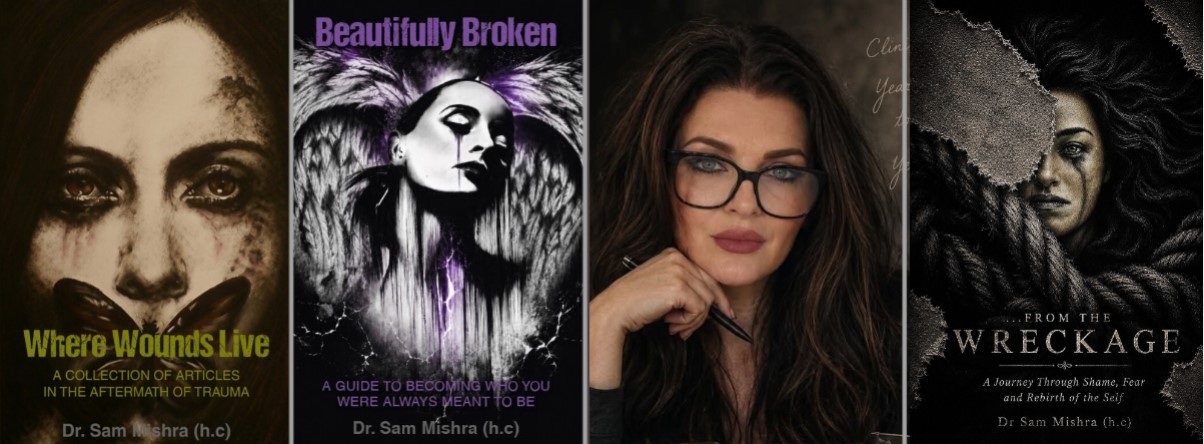
I learned to write the way I learned most things: by doing it, badly at first, over and over, until it started to sound like something true. No creative writing degree, no formal course. Just years of sitting with the page.
The clinical grounding in my writing comes from my years as a nurse and midwife — from learning to read research studies properly, and from holding myself to evidence-based practice long before I ever held myself to a deadline.
But the rest of it, the part readers seem to feel most, comes from somewhere else entirely: my work as a therapist, sitting across from people in their hardest moments, and my own years of having had my voice silenced. There is a particular kind of reflection that comes from not being heard for a long time. Eventually you either stay quiet, or you learn to say the true thing clearly, on your own terms. I chose the second one, eventually.
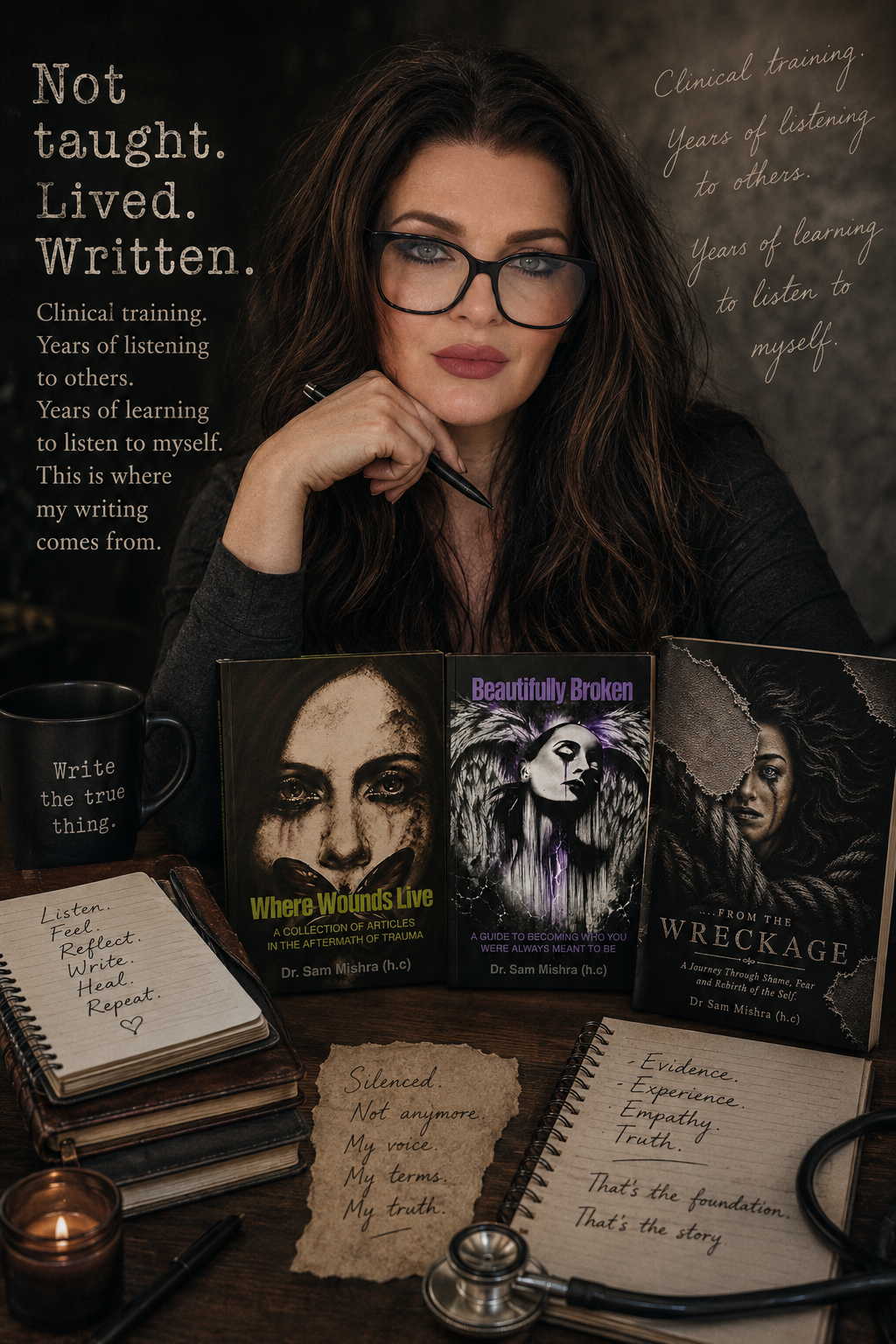
My books aren't the result of craft classes. They’re the result of clinical training, years of listening to others, and years of learning to listen to myself.
I spent three years writing as a Senior Executive Contributor for Brainz Magazine, and have been featured in numerous international publications across Europe,North and South America, Asia and the Middle East. Then in 2026, my first two books were published.
The books happened in all honesty due to someone repeatedly telling me I should do it and some further trauma which required me to come up with a new coping mechanism.
For so long, I was told my pain wasn't real. Sharing my story is how I reclaim my truth — it's how I affirm, to myself and to anyone listening, that what happened to me actually happened. Retelling it helps my brain make sense of the chaos. It's part of how I integrate what I went through instead of letting it control me. Every time I put the story into words, I understand it a little more. After years of isolation, I long to be understood. Telling my story is how I connect with others who've lived through something similar — people who don't need it explained to them, because they already know.
I was conditioned to protect my abuser's image long ago, to stay quiet so the peace wouldn't be disturbed. Speaking out now is my way of breaking that cycle of secrecy. I won't carry that silence for someone else anymore. Each time I tell it, I shift a little further from victim to survivor. I'm not just the person the story happened to — I'm the one telling it now, and that's a kind of power nothing can take back.
I know my story could reach someone else who's living what I lived. If it helps even one person feel less alone, then my suffering means something beyond just pain — it becomes purpose. The more I share, the less control the memory has over me. Every time I speak it out loud, I release a little more of what I've carried in silence for years, and in the process I rebuild my own identity more, finding not only my voice, but also my self-worth.
Abuse tried to erase who I was. Writing my story is how I find my way back to myself — my voice, my strength, my worth. It's how I remember who I am.
You can read all of my published articles and magazine features, plus find out more about my books and my self help guides on this site.
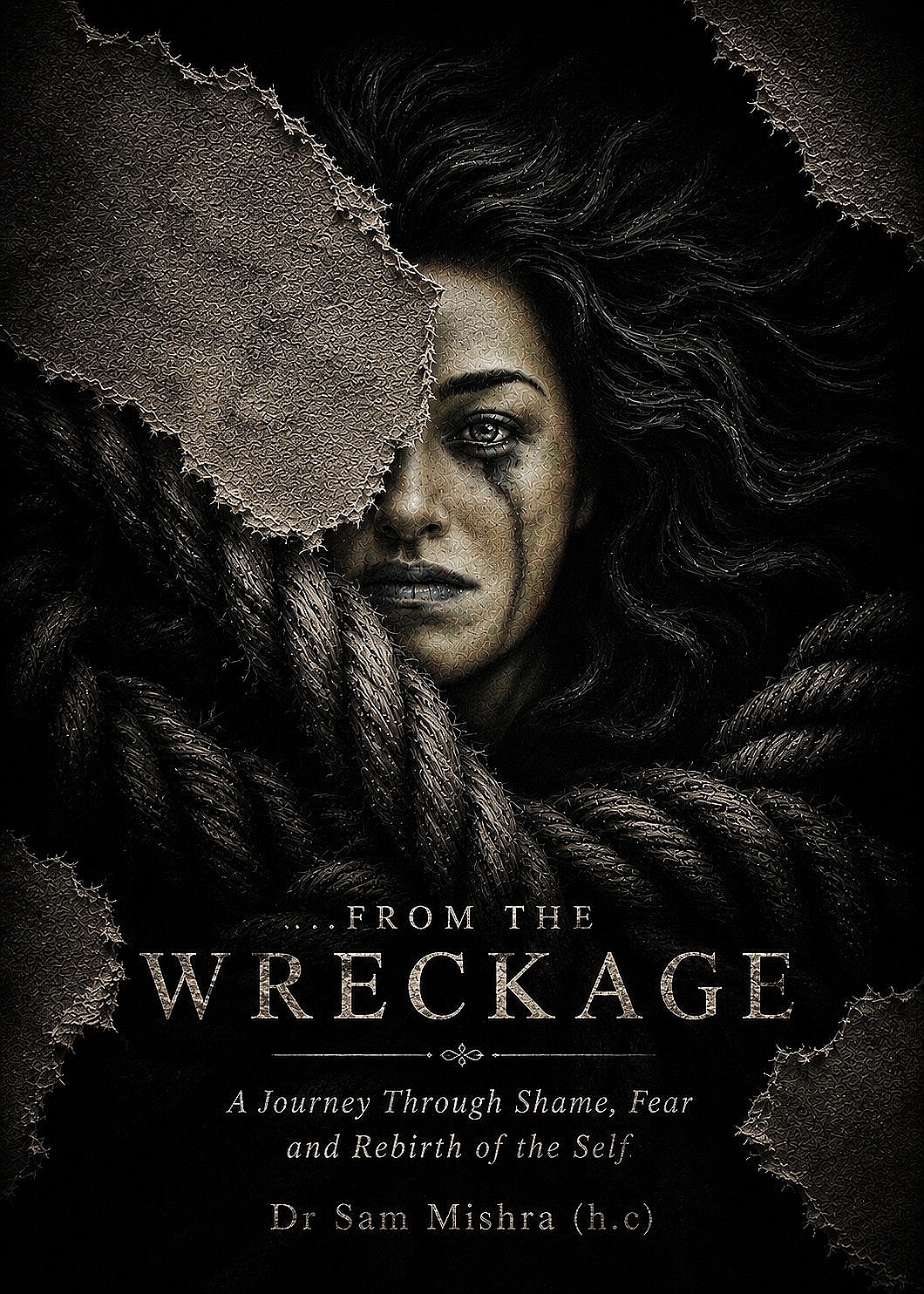
From the Wreckage moves between two vantage points: the person inside addiction, and the person standing beside them, trying to hold on. Drawing on her clinical background in trauma and addiction work and her own history of self-harm, disordered eating and complex PTSD, Mishra dismantles the idea that addiction is a moral failing. In its place, she offers something more precise and more human — addiction as adaptation, shame as its hidden engine, and recovery as a non-linear, often circular process of rebuilding a self once the coping mechanism is gone.
This is not a clean redemption story. It traces the unpredictable house of a childhood shaped by another's addiction, the dissociation that once felt like safety, the exhausting work of compliance and people-pleasing, the specific grief of loving someone who leaves the moment they arrive at stability, and the question underneath all of it: who are you, when the thing you used to survive is no longer available to you?
Part memoir, part clinical field guide, From the Wreckage is for anyone who has stood in the ashes of addiction — their own, or someone else's — and wondered whether there was a way back to themselves. There is. It rarely looks like a straight line. This book maps it anyway.
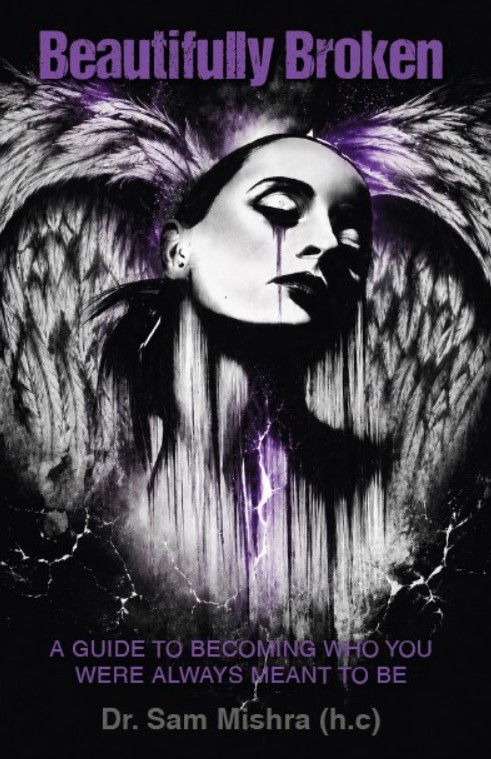
What if the very things that broke you were always meant to make you?
Beautifully Broken is a raw, compassionate, and deeply practical guide to becoming who you were always meant to be — not despite your wounds, but through them.
Drawing on three decades of clinical practice as a trauma practitioner, nurse, midwife, and transformational coach, Dr Sam Mishra (h.c.) weaves together the neuroscience of trauma, depth psychology, somatic wisdom, and her own unflinching personal story to offer a roadmap for genuine, lasting change.
This is not a book about quick fixes or toxic positivity. It is an honest reckoning with the unconscious patterns, personality archetypes, and relational wounds that quietly shape our lives — and a step-by-step journey through the inner landscape most of us spend a lifetime avoiding. From shadow work and inner child healing, to trauma bonding, the Drama Triangle, and the Hero's Journey, each chapter moves you closer to the most authentic and empowered version of yourself.
Organised around the same transformational framework that has changed hundreds of lives in Dr Mishra's acclaimed workshops, Beautifully Broken meets you exactly where you are — and walks with you toward who you are capable of becoming.
Because you were never broken beyond repair. You were always becoming.
The sequel to Where Wounds Live.
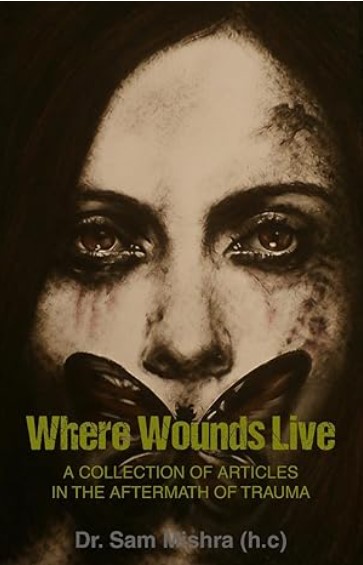
Where Wounds Live is a ground breaking collection of articles that takes you deep into the landscape of trauma — not to dwell there, but to find the way through.
Drawing on her background as a nurse, midwife, and trauma practitioner, Dr. Sam Mishra (hc) brings both clinical precision and hard-won personal experience to some of the most pressing and rarely spoken-about challenges of our time.
From the long shadow of narcissistic abuse and the silenced reality of male sexual assault, to addiction, body image, grief, generational trauma, and the quiet revolution of somatic healing — this book leaves no wound unexamined.
Spanning 67 articles across ten powerful themes, Where Wounds Live refuses to simplify what is complex or sanitise what is painful. Instead, it offers something rarer: honest, compassionate, and deeply human understanding. Whether you are navigating your own recovery, supporting someone who is, or working on the frontline of trauma care, these pages will challenge what you think you know — and illuminate what you may never have considered.
This is not just a book about surviving trauma. It is a guide to understanding where it lives inside us, and what it takes to truly come home to ourselves.
Where Wounds Live received a Gold Literary Titan Book Award (2026)